
RESOURCES / Ohr
Using responsibly sourced timber
Using responsibly sourced timber helps promote forest management that considers environmental, social and economic impacts.
Ohr Notes
Ohr Notes 001 · Rev 02 October 2026 · First published December 2014
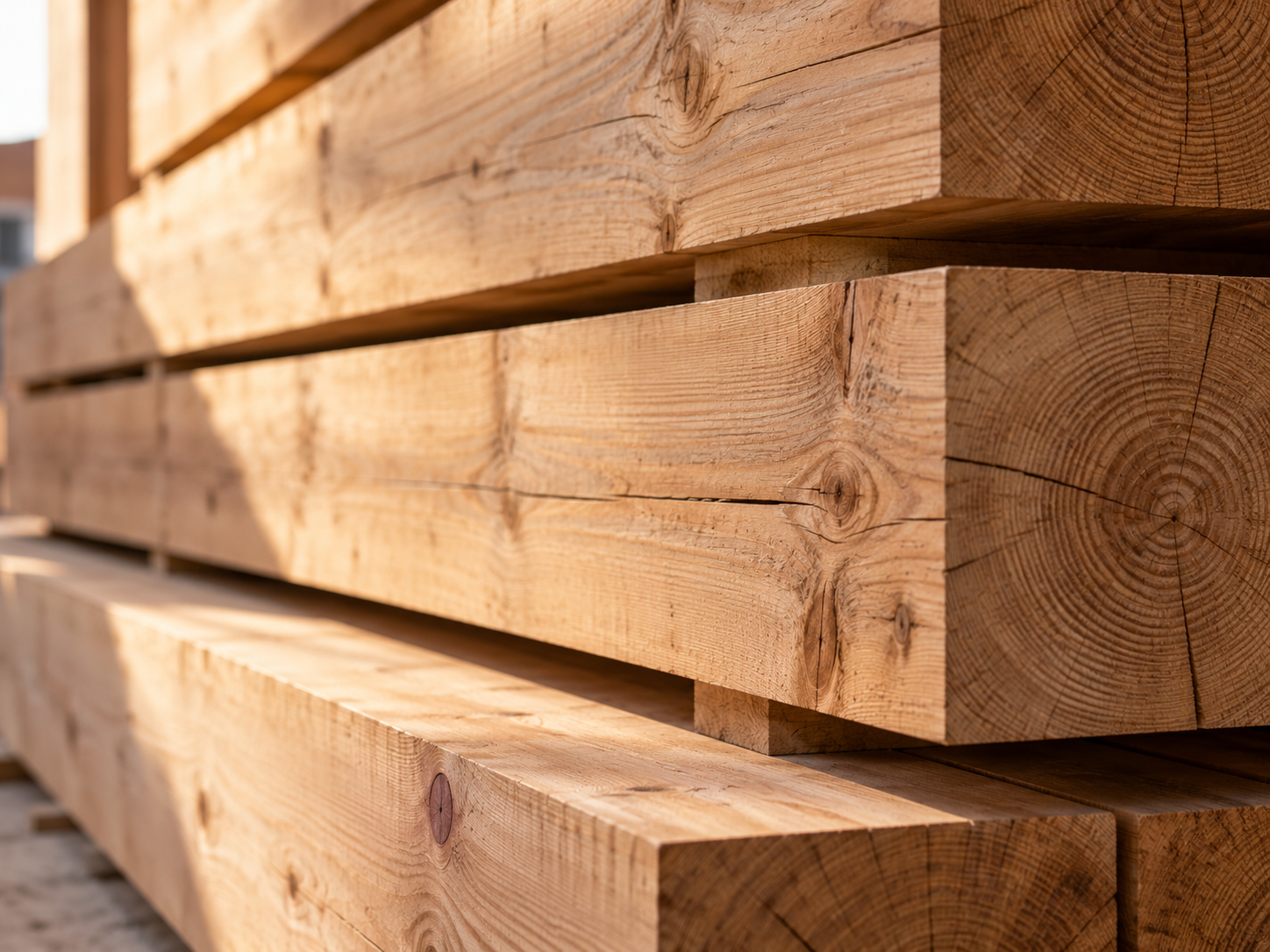
Using responsibly sourced timber helps promote forest management that considers environmental, social and economic impacts. One way clients can support responsible procurement is to require timber certified under a recognised forest certification scheme.
What is timber certification?
Timber certification provides independent verification that forest management or the sourcing and handling of timber products meets specified requirements.
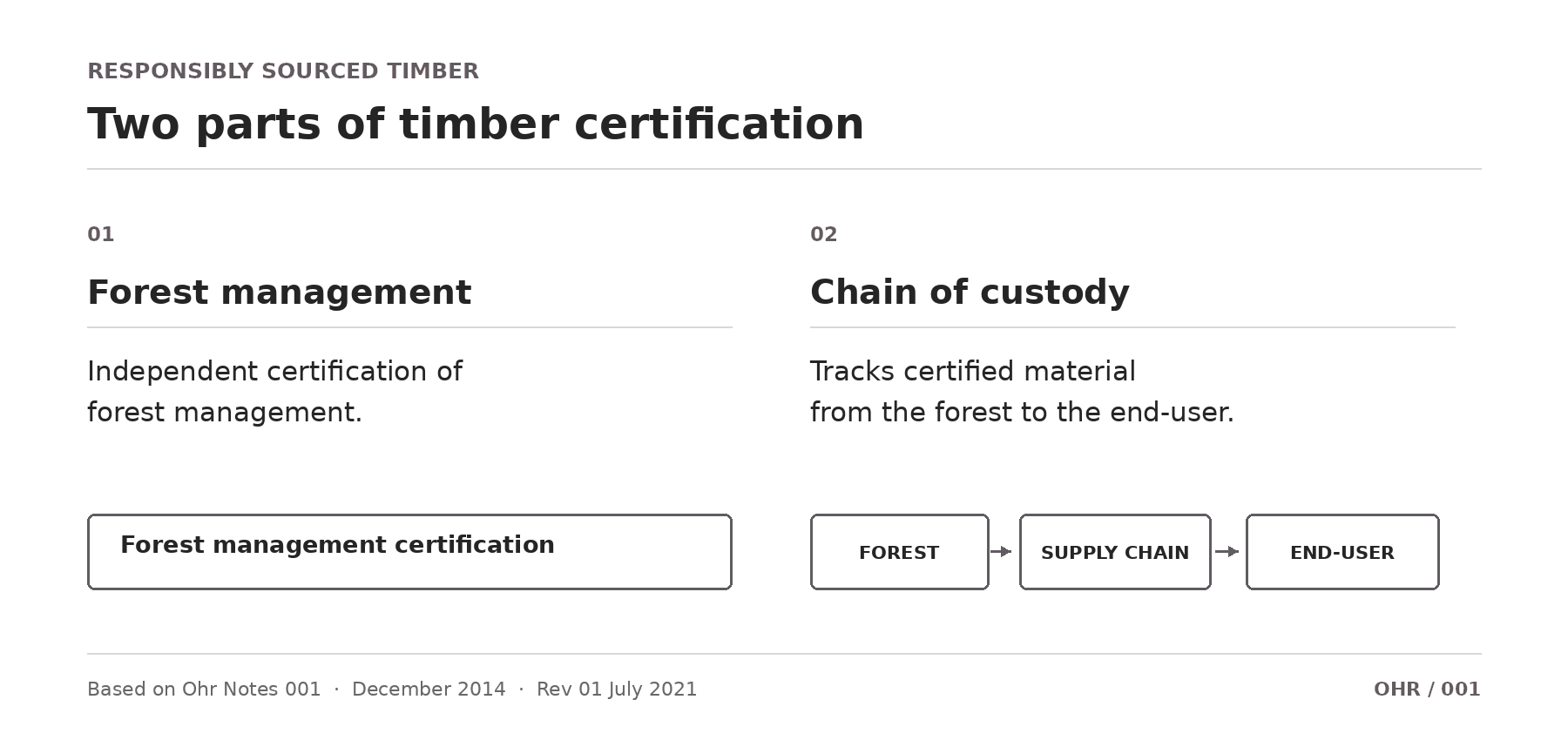
There are two complementary forms of certification:
- Forest management certification assesses forest management against defined environmental, social and economic requirements.
- Chain of custody certification provides a means of tracing certified material through the supply chain, from the forest to the end user. It enables suppliers to make verifiable claims about the certified content of their products.
Both are important. Forest management certification concerns how a forest is managed, while chain of custody certification concerns the origin and handling of the material supplied.
What are the common certifications?
Two internationally recognised certification systems are:
- Forest Stewardship Council (FSC) — www.fsc.org
- Programme for the Endorsement of Forest Certification (PEFC) — www.pefc.org
Malaysia has its own Malaysian Timber Certification Scheme (MTCS), which is endorsed by PEFC.
The Malaysian Timber Certification Council (MTCC) develops and administers MTCS. Independent, accredited certification bodies carry out certification assessments and issue certificates.
Further information: www.mtcc.com.my.
Can certified timber be sourced in Malaysia?
Yes. Timber products certified under FSC or PEFC-recognised schemes are available in Malaysia.
Availability depends on the timber species, product type, dimensions and supplier. Certification status and product coverage should be verified before procurement.
How should designers specify certified timber for projects?
Designers should establish certification requirements at the specification stage and ensure that the contractor and suppliers can provide adequate evidence of compliance.
Sample specification
All new timber shall be sourced from responsibly managed forests and supplied with a valid FSC or PEFC-recognised certification claim, or an equivalent independently verified certification acceptable to the design team.
Suppliers shall provide evidence of valid chain of custody certification covering the relevant products. The certification claim, supplier’s chain of custody certificate number, product description and quantities shall be identifiable in the relevant sales or delivery documentation.
Certification status and scope shall be verified through the relevant certification scheme’s official database.
Timber species prohibited under applicable legislation or trade restrictions shall not be used. Any proposed substitution or exception shall be referred to the design team for approval.
Current practice note — 2026
Certification demonstrates conformity with a defined certification scheme. It does not, by itself, establish that a timber product has no environmental impact.
For construction projects, project-level certification may also be considered. FSC provides project certification, and PEFC introduced its Project Sourcing standard (PEFC ST 2102:2026) in June 2026.
First published: December 2014
Revision 01: July 2021
Revision 02: October 2026