
RESOURCES / Ohr
Need waterproofing if the water table is lower than basement level?
Examines whether basement waterproofing may still be required when the measured water table is below basement level, taking account of perched groundwater and risk assessment.
Ohr Notes
Ohr Notes 007 · Rev 00 July 2021
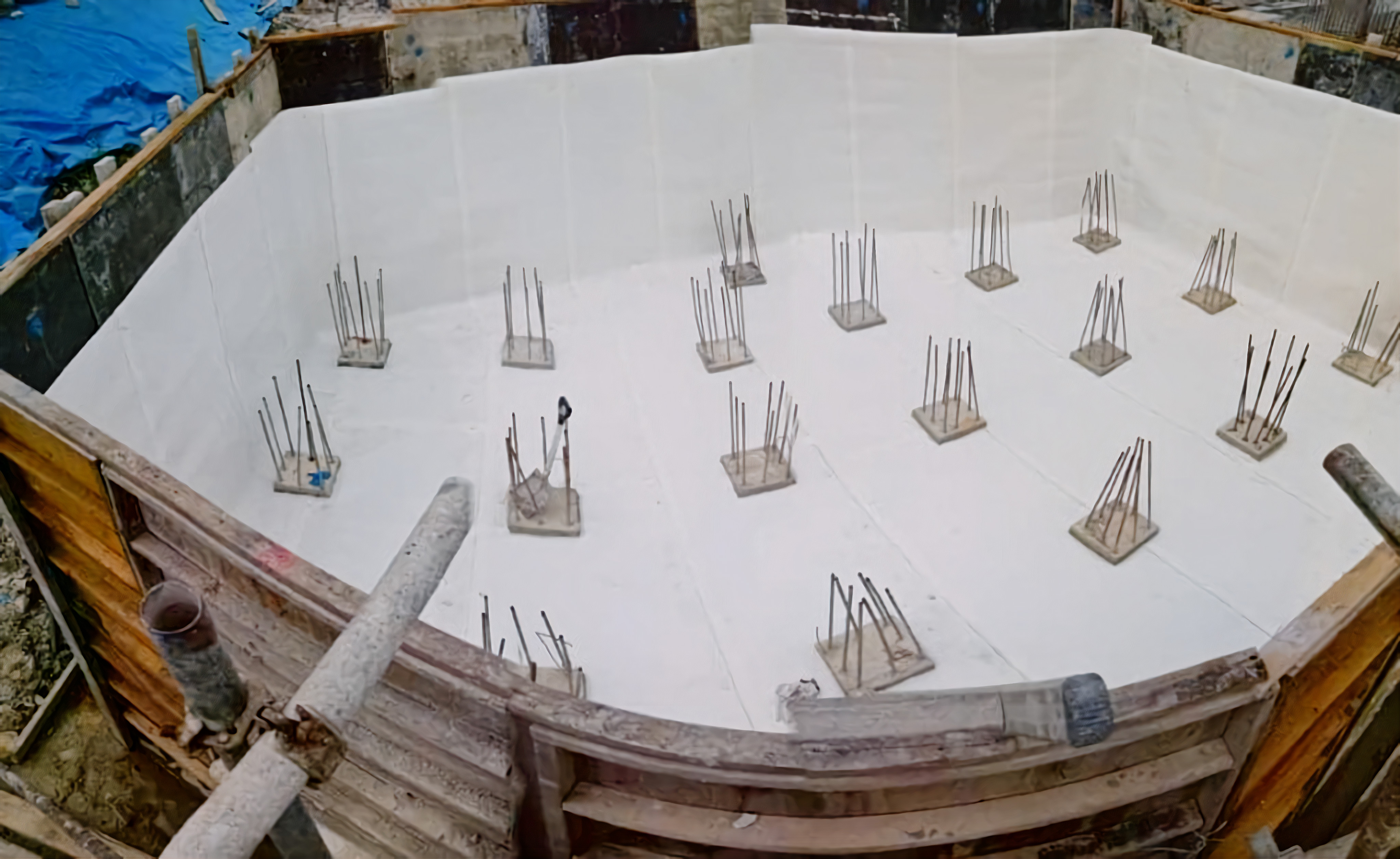
If the soil investigation shows the water table to be below basement level, should the basement still be protected against water from the ground? This note discusses this question.
Photograph: Annovatech.
What is waterproofing?
In the context of a basement, waterproofing is the application of waterproof or water-resisting material to protect it from water ingress.
Water table and types of groundwater
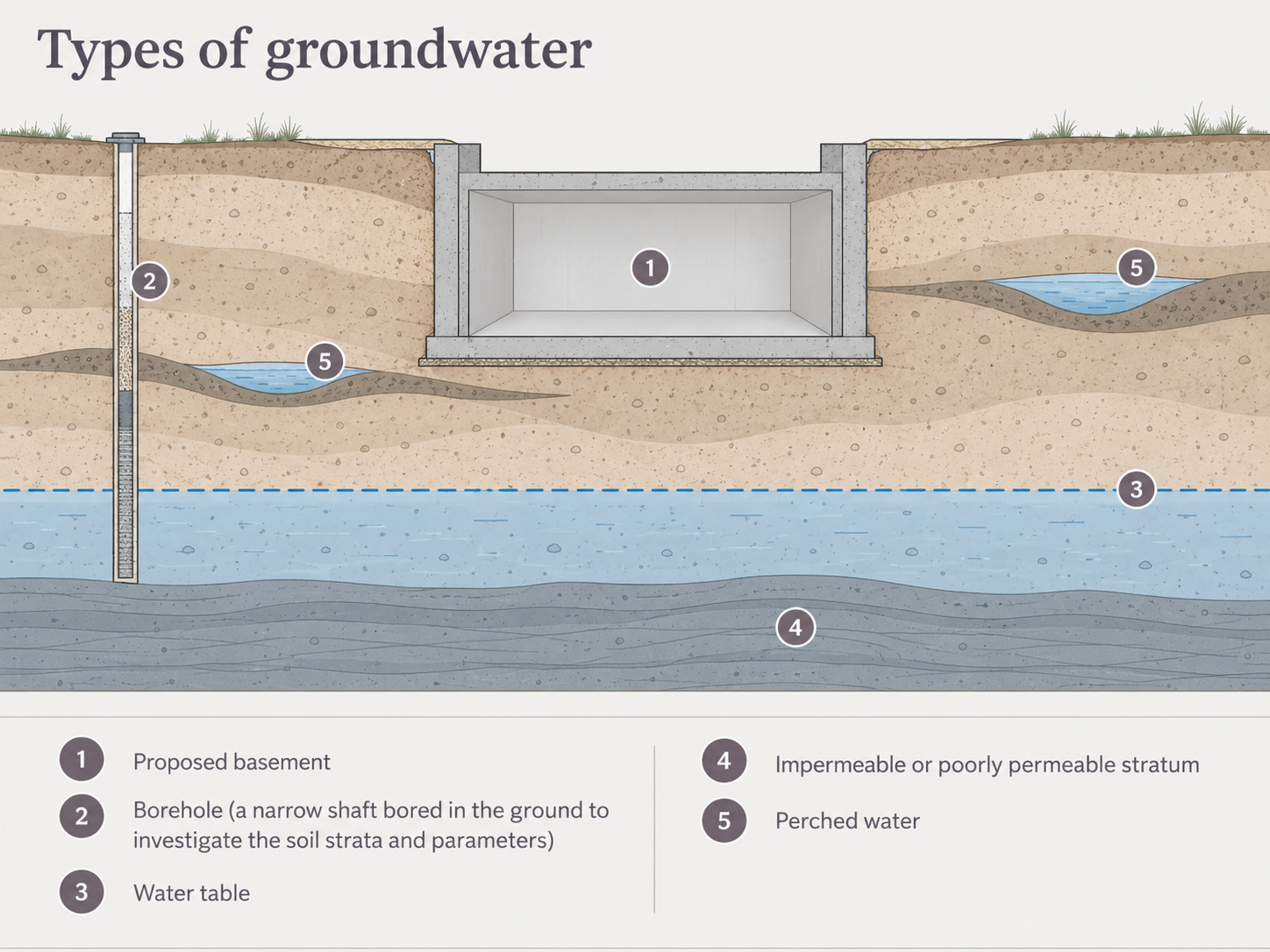
Water table is the level at which the soil is saturated with water. However, this is not the only type of water found in the ground.
Perched water is another type of groundwater that should be considered. Perched water is a water reservoir in the ground maintained permanently or temporarily above the water table, caused by an impermeable or poorly permeable stratum.
Soil investigation can determine the water table. However, it is not always possible to assess whether perched water exists. Also, the basement itself could cause a change in the existing water path resulting in perched water.
Therefore, although the water table may be lower than basement level, there is still risk of perched water penetrating the basement. The probability of this should be assessed and considered.
BS 8102
Best practice for dealing with and preventing entry of water from the ground into basements was detailed in BS 8102:2009, Code of practice for protection of below ground structures against water from the ground.
The 2009 edition, current at the time of publication, stipulated that a risk assessment should be undertaken to determine the extent and type of protection, taking into considerationi:
- Long-term water pressures, the effects of surface water infiltration, and the use of external drainage and cut-off walls.
- The effects of climate change, burst water mains and sewers, adjacent trees, sulfates, radon, methane and other ground gases and contaminants.
- Where external drainage is proposed (cavity wall system), the effects of drawdown on adjacent structures, potential silting of drainage and biofouling issues.
- Even when the site investigation indicates dry conditions, the risk of some waterlogging in the future should be assumed, as groundwater requires time to drain away and can cause limited pressure periodically against the structure.
The above should be assessed in the context of the basement’s usage, including potential future uses where applicable, the acceptable internal environment for this usage and the impact on finishesii. The internal environment includes considerations of temperature, humidity, ground gases and contaminants, and tolerance towards water penetration and damp.
Also, even if the investigated water table is low, BS 8102:2009 only allowed risk associated with groundwater to be considered low if the structure was on free-draining strataiii.
Risks and liabilities
When assessments are done in accordance with BS 8102:2009, it is rare for basements to be deemed not to require waterproofing.
Where the water table is lower than basement level, choosing not to waterproof would not cause immediate structural collapse. However:
- Should there be any change to the water level from the scenarios detailed, water ingress could occur.
- This could cause the concrete and reinforcement to deteriorate from contact with water, leading to structural distress and even eventual failure.
- Water ingress is difficult and expensive to remediate after a building is constructed.
The building owner or developer must consult the project’s Professional Engineer with Practising Certificate (PEPC) when deciding not to provide waterproofing and must consider the acceptable level of risk. If a building owner or developer chooses not to comply with BS 8102, the PEPC is within their rights to discharge their liabilities relating to the consequent potential detrimental impact on the structure.
References and source notes
The definitions and content in the original publication are based on BS 8102:2009.
i BS 8102:2009, Clause 5.1.2.
ii Finishes: surface treatments to floors, walls and ceilings, for example floor tiles and wall claddings.
iii BS 8102:2009, Clause 5.1.3.
Editorial update: BS 8102:2022 superseded BS 8102:2009 on 25 March 2022.
Revision 00: July 2021